


Welcome to the fourth part of the Virtue series,
if you missed the beginning, catch up here.
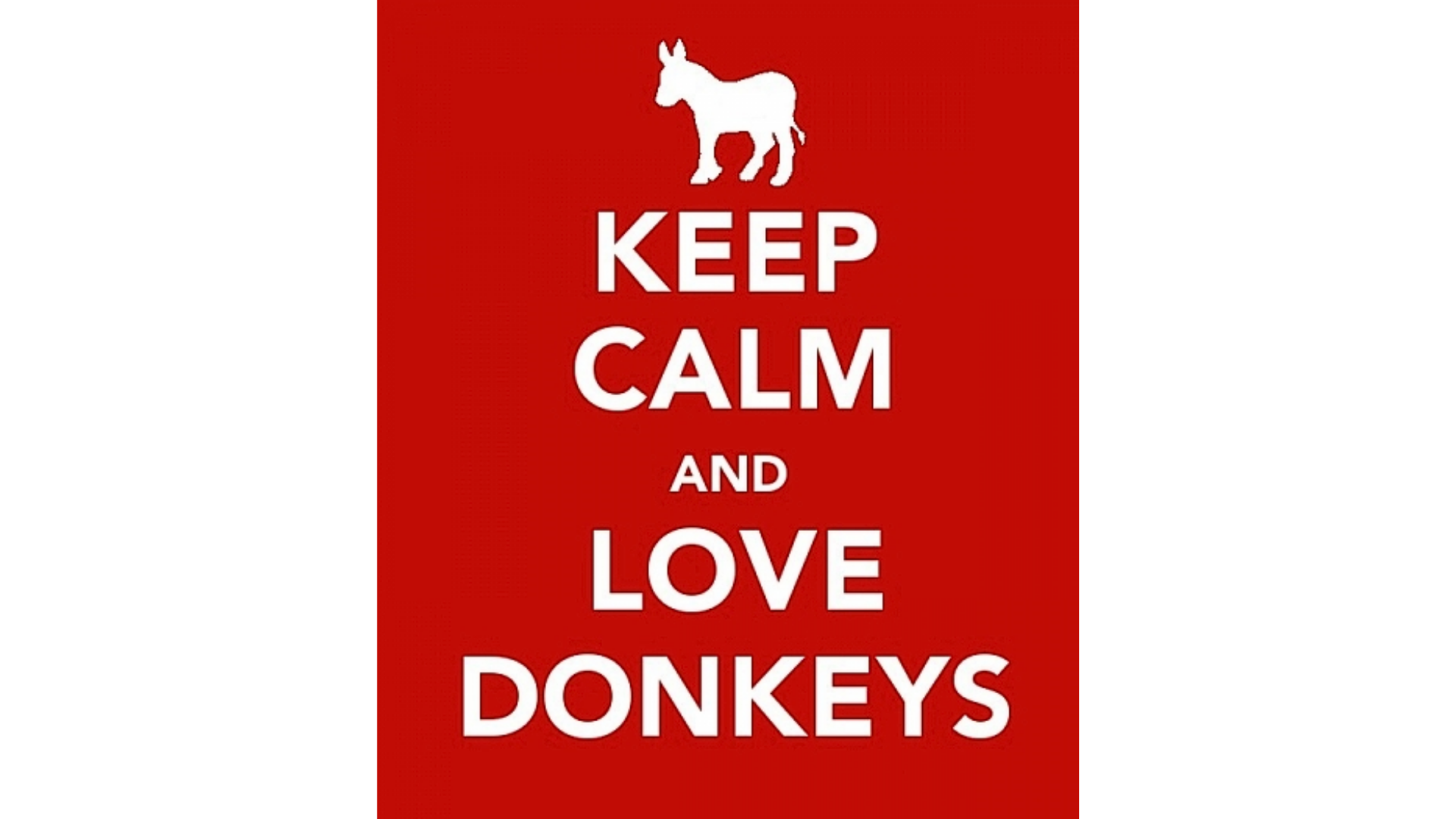
The United Kingdom, where I live, has a thing for donkeys.
But it didn’t always. Back in the 1980s, the British charity sector’s reigning playbook featured an impoverished child on the dirt floor of a hut with a distended belly. And, in the genre’s signature shot there was always a fly walking undisturbed across a pleading eyeball. All of it came scored to music engineered to make you feel like a war criminal for owning a kettle.
Today this exact set up, featuring what I’m pretty sure is exactly the same fly, stars a donkey.
It works.
The donkey sanctuaries are making an absolute mint. And the fly-on-the-eyeball economy is a going concern.
But when these ads play the last thing on earth I want to do is put my hand in my pocket. What I want to actually do is leave the room.
And I like donkeys.
Both of these things are true at once: the loving of donkeys and the leaving of the room. And the reason for this has nothing to do with a virtue. But with guilt.
Gossage’s Warning
Howard Gossage, the most quotable ad man ever despite the fact that he’s probably the least known, warned that guilt is not a virtue, because you really can’t build anything durable on it.
Someone you’ve guilt-tripped into something becomes someone who eventually learns to avoid you. It usually starts small with something like an impulse to change the channel or cross cross the street when they see you and then grows into the uncontrollable urge to look anywhere else but at the donkey.
So while the guilt appeal can harvest the small, flinching minority who couldn’t look away in time, it eventually pays for that harvest by teaching everyone else to flee.
The whole job, Gossage understood, is not to make people feel guilty but to feel good about themselves. Which raises the obvious question: what, precisely, is the good feeling that makes a person give? What is the virtue that permits the gift?
In a single word, sympathy.
And the man who explained why is, once again, Friedrich Nietzsche.
Feeling With, Not Sorry For
In Beyond Good and Evil, sympathy is named as one of the four virtues Nietzsche says must be kept under strict self-control. And I think his word for it matters: Mitgefühl, a kind of feeling-with. Which is very different than feeling sorry for.
Sympathy, for Nietzsche, is a current that runs between equals. Pity is what you hand to someone beneath you.
To see how this works, run the dinner party test from our first issue. Stand up, while the mains are being served, and announce, “I feel such pity for those poor creatures.”
You’d likely get some version of an “Awww! Yes, I know, the whole situation is so diabolical,” paired with “oooh, you’re such a lovely person” and a nice Chianti.
Now try Nietzsche’s version: “I reserve my sympathy for my equals.”
You’d definitely get a very long silence before someone asked you to pass the gravy.
And yet, once again, this unsayable gravy boat version, is the only version that operates as a virtue, because your true compassion, whether you’d put it this way or not, has a membership policy. And the reason for this is that you can only feel-with the people you recognise as your kind of people. You feel sorry for everyone else, and only one of these feelings has ever reliably opened a wallet twice.
The Purchase Mechanics
Listen to sympathy work at the till in the justification of the Kickstarter backer, who recognises the founder and maybe even envies her a little while reaching into their wallet saying, She’s doing her thing, just like me, and my forty quid investment is a handshake between equals. I believe in what she’s doing.
Who’s the subject here? It’s most certainly not the founder and there’s not even a whiff of pity or guilt. That last sentence really says: I’m the kind of person who recognises quality people, and they’re the kind of people who are a lot like me.
Note the alibis we’ve now collected for our medal cabinet, so you can tell the virtues apart as the series goes on.
Insight says: I see what others miss. Honesty says: I admit what others won’t. Sympathy says: I recognise my own kind and the Kickstarter patron looks lovingly in the mirror, because patronage has always been the rich man’s way of buying a mirror.
Which brings us back to the donkey and the strategic error underneath the fly.
What the Beggar Gets Wrong
The problem with using the guilt playbook is that it positions the cause beneath the donor.
It always somehow finds a way to make you look at the diabolically wretched from the rather fortunate position of a comfy sofa that suddenly stops feeling so comfortable.
And once you feel the distance between wretched and fortunate, you pay to make it stop.
The best-funded causes in the world actually do something quite different. They throw away the guilt playbook and compete for attention the way brands do: glossily, confidently, aspirationally, and no one demonstrates this better than charity: water.
Their photography and music are a masterful blend of realism and hope more often found in films like Field of Dreams or The Straight Story than in charity advertising. And their messages? Always sympathetic, in the true Nietzschean sense, and utterly hopeful. You’ll also be relieved to learn that they stick to a strictly no-fly zone policy.
Their July campaign (timed to launch on America’s big 250th bash) opened with the country’s greatest achievements and closed with an invitation: Let's make clean water one of humanity's greatest achievements... together.
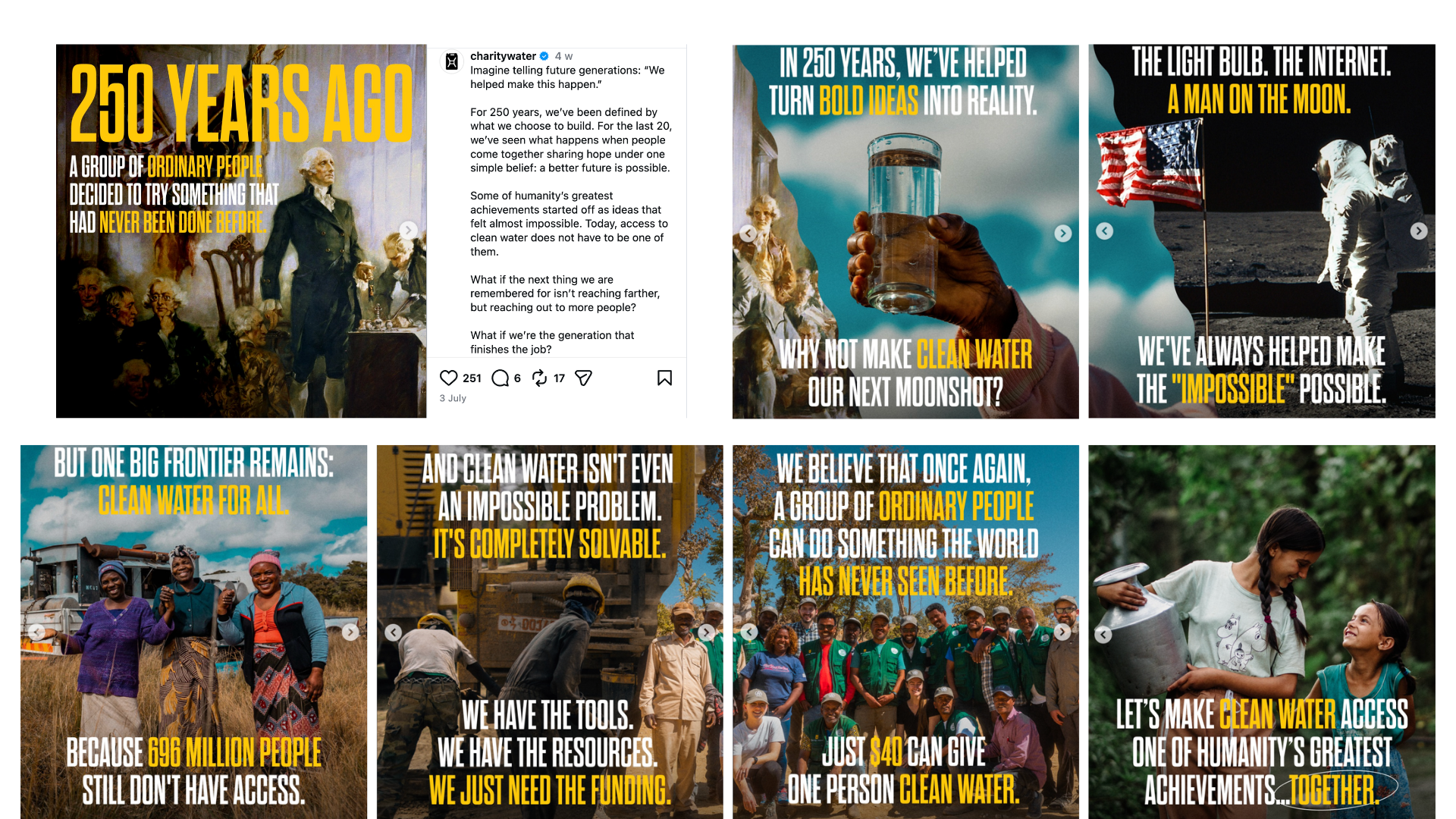
charity: water refuses the beggar's position and speaks with the confidence of an organisation doing extraordinary work and the invite you to stand alongside them to do the impossible.
That is carefully engineered Mitgefühl where the donation becomes a gift between equals rather than a fine paid to a fly.
The Uncomfortable Part
I get that all of this might sound pretty brutal. But I refuse to soften it up, because the fact is people give to identities they wish to belong to.
The charity sector’s fiction is that the act of giving flows toward need, when it really flows toward kinship. You might find my argument cold-blooded, but I’d only ask you to hold fire on any complaints until you check it against which appeals you answered this year, and which you deleted, and how quickly, and what the ones you answered had in common with you.
I think that once you do, you might just realise that Nietzsche’s only cold-blooded move had nothing to do with inventing all of this. He simply happened to be the first person, that I know of, who wrote it down.
A Small Confession
I have an independent magazine fetish that goes to such extremes that I even fangirl crush on zine authors to the point of asking for a selfie.

I’ve told myself for years that I’m proud to support independent publishing.
But if I’m honest with myself , I don’t really buy the struggling magazines that need a life jacket. I buy the beautiful, already thriving ones edited by people whose taste I see reflected in my mirror.
In other words, I am feeling-with and Nietzsche would have likely found me entirely unremarkable.
Hopefully, he would still be sympathetic toward me though.
Angelique
Next up: the Virtue of Bravery
