

The Alibi
You've told yourself one for everything you've ever bought


There’s a question that’s been put to the consumer, in one form or another, since the first market researcher picked up the very first clipboard, and it goes like this:
Why did you buy it?
No one has ever answered it truthfully.
Not the woman in the focus group, not the man in the Gallup poll, not the respondent ticking the box marked “quality,” not you, and, I want this on the record before we go any further, not even me. I have answered this question hundreds of times in my life, and on every single occasion I’ve been sincere, articulate, and wrong.
This isn’t because we’re liars, but because of something considerably more interesting: we really don’t know. The decision is made in one room of the mind, and the explanation is drafted in another, and the two rooms don’t share a door. What the researcher collects, what the survey tabulates, what the brand tracker faithfully reports up the chain to the CMO, is rarely the reason for the purchase.
It’s the alibi.
But it’s a very important alibi.
And the worst thing a brand can do is dismiss it.
This edition (and the eight that follow) will be all about why.
Where We’ve Been
For those who’ve joined us recently - a map.
We spent the better part of a year in this newsletter talking about pleasure: the $13.4 trillion economy of it, the Codes that organise it, the scratch, as we came to call it.
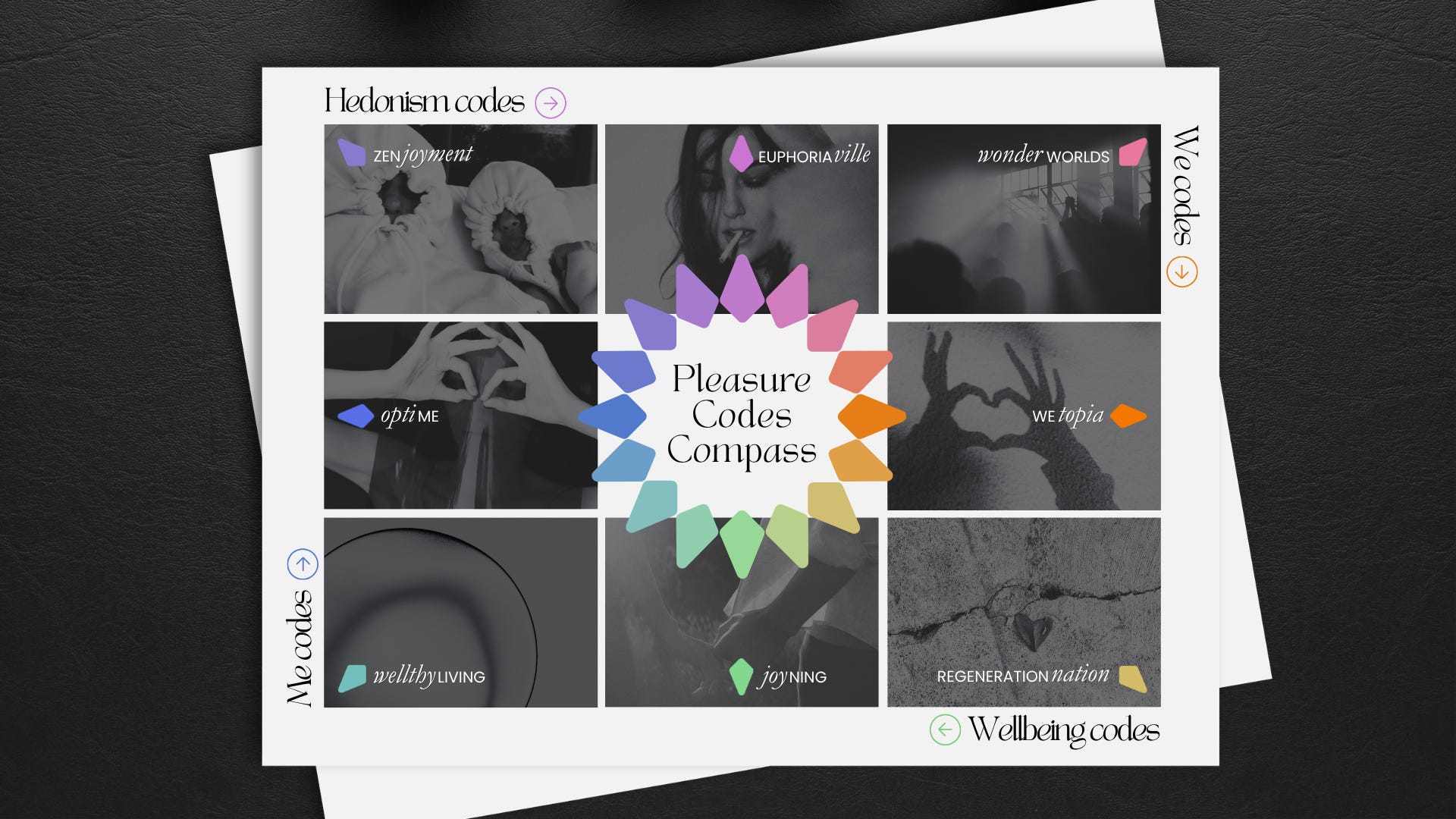
Then, for eight issues, we explored the sins. We took Chris Paik’s venture capital thesis, that every attractive investment opportunity appeals to at least one of the seven deadly sins, and we walked through them one at a time: lust and envy and gluttony and sloth and wrath and greed and pride, plus the eighth one (fear) my boxing coach insisted we had left out, and he was right.
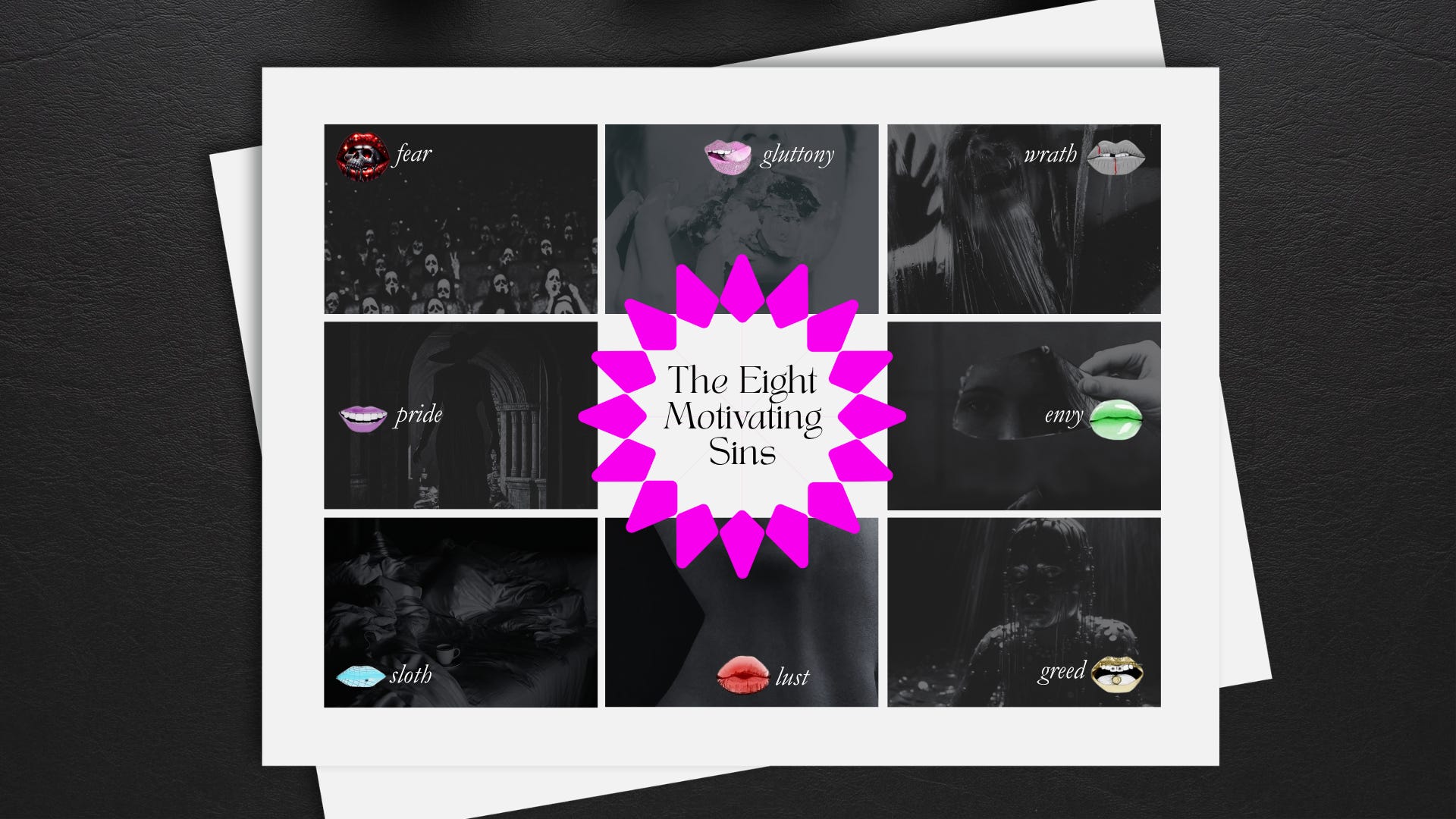
And the argument, in case you missed it, was that the sins are the better, more honest way to talk about the human drives. Better than Maslow, who took the same drives and made them presentable. Better than the purpose-driven manifesto, which takes the same drives and pretends they’re not in the building. And this is because the sins are the drives called by their oldest, least flattering names, and their honesty is precisely this utility. The itch is the sin. The scratch is the Pleasure Code. And the brand is the back scratcher.
I stand by every word of it. But it also doesn’t tell the whole story
The Whole Story
Human motivation, commercially speaking, comes in three parts, and so far we have only named two of them.
The motivation is the sin. Primal, involuntary, unchosen. The itch.
The desire is the pleasure. The aesthetic design and satisfaction delivered in emotional and sensorial form, or the scratch.
And then, after the itching and after the scratching, arriving always slightly late (like your weird aunt or uncle) and always impeccably dressed (also like your weird aunt and uncle) comes the third thing.
The reason.
The reason is what the consumer says to the researcher, the spouse, or the colleague who raises an eyebrow at the new car, to justify the purchase (or any decision) in their mind to others. But mostly, and this is the part that matters, to themselves.
In other words, the reason is the story a person tells the self so that the emotional decision they’ve already made can be refiled, after the fact, under sound judgment.
Advertising, to its credit, confessed all this a century ago and then forgot it had done so. The oldest term of art in the business is “reason-why copy,” which is, as its name implies, copy that supplies the reason why someone should buy something. Notice the honesty buried in the jargon (copywriters back then were battling the Barnumesque copy and tended to view honesty as a copywriting technique). Nobody ever called it “reason copy.” It was always reason-why: a reason attached, after the fact, to a why that was already there. The industry has always known that its real job was not to give people reasons to buy but to give people reasons for having bought, even if they haven’t yet.
Today it simply prefers not to say so in the case studies.
So the question becomes: if the sins have a map, and the desires have a map, where’s the catalogue of the things people tell themselves to sell themselves?
Nobody, as far as I can tell, has ever drawn one.
So, naturally, that’s what I’m turning my pen to next.
Why I Call These Alibis Virtues
If the sins are the timeless human motivations, then the reasons, the justifications, the stories, the alibis, are the virtues. A virtue is a quality a person credits the self with, and a justification is an act of crediting oneself with a quality. Which makes every “I bought it because…” that’s not linked directly to a sin or a pleasure is a small private ceremony in which the buyer pins a medal on their own chest.
So, like I did with the eight sins, the first thing I did was audit the existing lists of virtues, of which Western civilisation has produced a suspicious number.
The Church has its cardinal virtues, assembled as the official opposition to the cardinal sins. But those were too moralistic and evangelical. Benjamin Franklin, never a man to leave a list undrafted, famously produced thirteen of his own as well as a system to master them: temperance, frugality, industry, and so on down the ledger.
There’s nothing wrong with these lists.
They’re worthy and altruistic. But they’re also, and I have not been able to improve on the word since it came up in the room where we built this framework, puritanical. They are virtues designed to be displayed as a means of overcoming human nature and therefore come with no real risk to them.
To understand what I mean, try this test: stand up at a dinner party and announce that you’re working on being more temperate or more industrious. What happens? A fist bump or someone tops up your glass. There’s no risk in any of it. And where there’s no risk there’s no honesty, and where there is no honesty there’s nothing that a human being would actually whisper as the self-justification while handing over a credit card for a Patek Philippe watch.
“I’m merely holding on to it for the next generation, I swear.”
Which is how I ended up with the virtues listed by a less obvious choice when one thinks of virtues.
The philosopher Friedrich Nietzsche.
Nietzsche’s Eight
Nietzsche made his lists of virtues twice, and, as you'd expect from Nietzsche, they look like no one else's, even when the words are exactly the same.
In Daybreak, he lists four: honesty, bravery (Tapferkeit), generosity & politeness.
In Beyond Good and Evil, four more, which he said must be kept under strict self-control: courage (Muth / Mut), insight, sympathy, solitude.
I know that courage and bravery sound the same, but for Nietzsche they were not (and we’ll get to that in those issues).
Taken together, they make eight.
And what makes them different from Franklin’s thirteen is the same thing that made Paik’s sins different from Maslow’s hierarchy: the simple fact that they have not been cleaned up for company.
For example: Nietzsche’s honesty is not “be honest.” It is: honest towards ourselves and whoever else is a friend. Read that again and notice what it leaves out. It leaves out everyone else. It’s a virtue with fine print. These are the things you’d never say at a dinner party, which is exactly why you might actually say them to yourself.
Which brings me to the commercial point, and I will state it as plainly as I can, because it is the hinge on which this entire series turns.
Two Rules (Please Tattoo Them Somewhere Discreet)
Rule 1: After the itch of a sin is scratched by a pleasure, people will only buy from brands that let them justify the purchase to themselves, with one of eight virtues.
The virtue never causes the purchase. The pleasure does. The virtue is just the thing that permits it and even later justifies it. The Pleasure Codes seduces, but the virtue signs the paperwork. And this is important to understand because a brand that scratches the itch but withholds the alibi will lose the sale, at the last possible moment, to a brand that scratches the same itch and hands the consumer a story they can live with.
And from this follows Rule 2: If you find your brand positioned on a virtue, you are doing it wrong.
The virtues aren’t for other people. That’s their whole point. They are the private ceremony, and a brand that performs the consumer’s private ceremony in public is like a stranger reading your diary back to you in a warm, encouraging voice. (This, incidentally, is what Howard Gossage understood when he warned that one of the worst things a non-profit brand can do is make people feel guilty which reads as an accusation.)
There’s exactly one place in the marketing canon where a virtue may appear, and that is at the bottom of the funnel in the direct-response ad, or the closing argument and final nudge where your job is only to hand the already-seduced the sentence they’ll repeat to themselves on the drive home. We’ll watch this happen in detail in the next issue on Insight.
A Confession Before We Begin
It would be poor form, in a series about the stories people tell themselves, not to disclose mine.
I have told myself that we are building this map because the industry needs it, because nobody has done it, and because the third layer completes the framework of the itch, the scratch and the alibi. All of this is true. But underneath these reasons, is the only honest one: it is enormously pleasurable to see what everyone else has missed, which, you will notice when you read the next issue, is that Insight is in and of itself one of the eight.
Essentially, I am inside the machine I am describing and so are you. That is not a flaw in the framework. That is the evidence for it.
— Angelique
Next time: the virtue of Insight, the intellectual clarity to see through societal illusions and herd values, or so we tell ourselves. Featuring a Land Rover, a tax write-off, and the only people on earth who are immune to advertising, and what they get emotional about instead.