

Joyning: The Loneliness Paradox
Or: Why the Algorithm Can't Find You a Friend

This is a series exploring the many dimensions of pleasure commonly (and curiously) overlooked by most brand innovators today. Here’s your complete guide to the full series.
There is an episode of Black Mirror (and if you haven’t watched it yet, I suggest you do) called “Hang the DJ” in which two people meet on a first date arranged by an omniscient dating system.
The system tells them precisely how long their relationship will last—twelve hours, in this case—and they dutifully part ways when the clock expires. They are then paired with others, for varying durations, accumulating data points from each encounter until the algorithm finally delivers its verdict: they are in fact a 99.8% compatibility match.
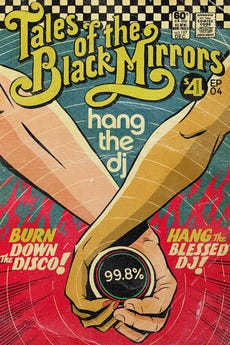
It is, on the surface, a happy ending. The couple rebel against the system, discover their rebellion was itself the test. But as they climb the wall to get to their happily-ever-after, the world around them dissolves as they discover they are merely consciousness in a computer simulation. The scene cuts to the couple meeting in the real world with matching confidence scores glowing on their phones.
I found myself thinking about this episode for weeks after it first aired. Not because the technology seemed implausible but because it struck me that we have been trying to engineer our way to meaningful human connection for a lot longer than we might care to admit. And the results have been, shall we say, mixed.
The Friend You Can Buy
Consider what happened in New York City not long ago. A startup called Friend blanketed the subway with advertisements for a wearable AI companion—a small pendant that listens to your conversations and sends you supportive text messages throughout the day. The copy was calculated to provoke: “I’ll never bail on our dinner plans.” “I’m always here for you.” The sort of thing an actual friend might say, if that friend happened to be a microphone connected to a large language model.
The backlash was swift and vigorous. New Yorkers defaced the advertisements with graffiti: “AI trash.” “Surveillance capitalism.” “Profiting off loneliness.” There were protests. Signs reading “Get real friends” appeared in the stations.
And then, with timing that bordered on the exquisite, Heineken launched its response. They introduced their own “wearable technology”: a bottle opener shaped like a pendant. The tagline: “The best way to make a friend is over a beer.” Below it, smaller: “Heineken: Social networking since 1873.”
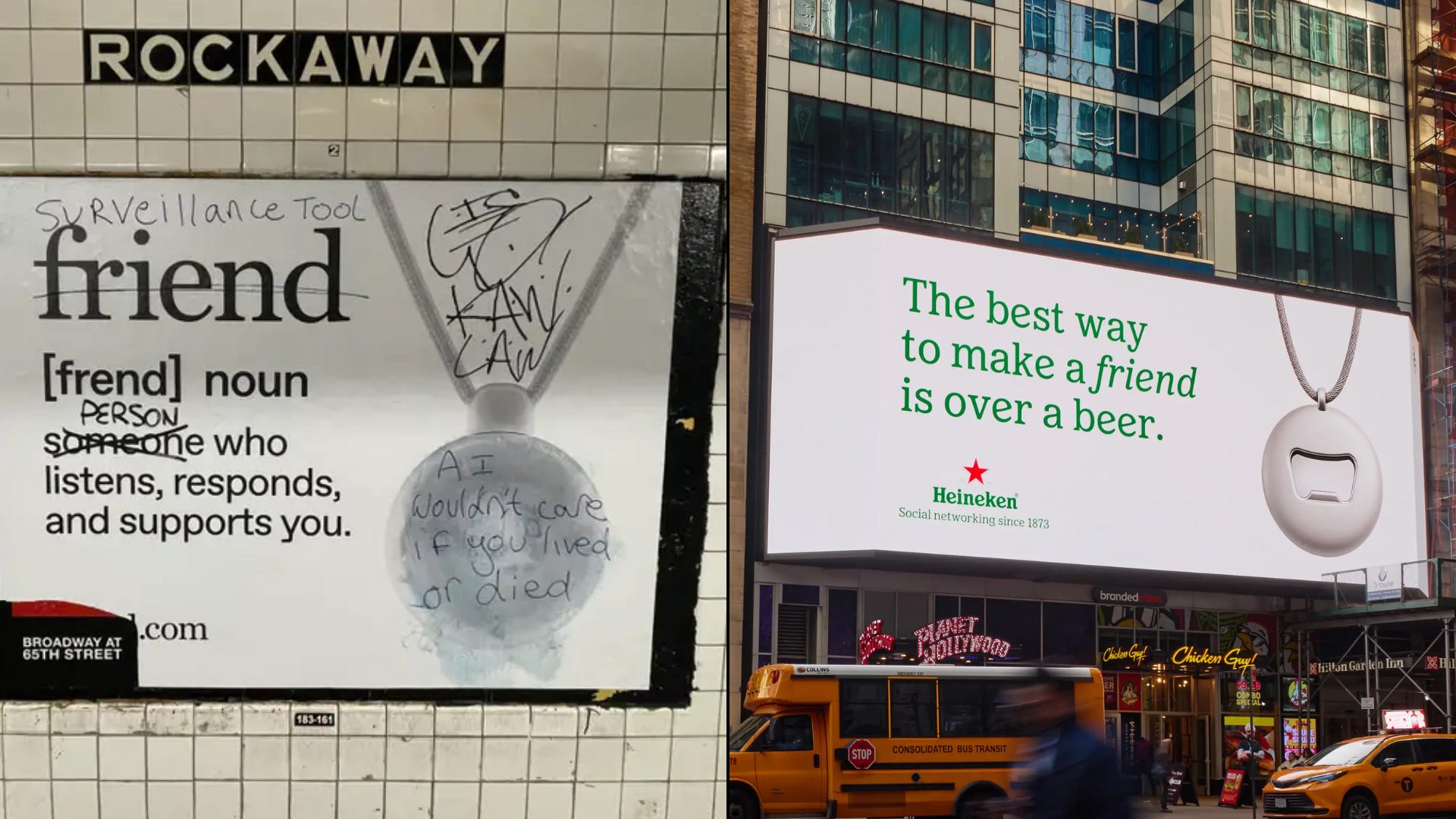
Pretty good advertising. Not because it was particularly clever (though it was), but because it touched on something that the Friend pendant’s creators seemed not to have understood at all.
The Pushy Person at the Party
We don’t, on the whole, like pushy people. We don’t warm to the person at the party who corners us immediately, maintains unsettling eye contact, and insists they really, really want to be best friends.
Like AI generated LinkedIn DMs, something in us recoils.
The same instinct applies to brands, and, it seems, to technologies designed to simulate intimacy.
When an AI pendant tells you it will never cancel dinner plans, it’s making precisely the kind of premature claim to closeness that human beings find alienating. It has done nothing to earn the right to such intimacy. It is, in effect, skipping to the end of a relationship that never had a beginning.
The best relationships between people, whether we’re talking about friendships, or the relationship between a consumer and a brand, are not unlike the best relationships between spouses. We feel most comfortable with people (and, curiously, with brands) when we feel that in some sense we have discovered them for ourselves. The human brain is on constant, unconscious alert for things, ideas, people with whom it might like to connect. But that connection must feel chosen, not forced.
Which brings us to an interesting question:
If we can’t engineer connection through force, can we engineer the conditions in which connection might naturally occur?
The Places Where People Live Longest
There are five places in the world where people consistently live past one hundred years of age at rates far exceeding the global average. Researchers call them Blue Zones: Okinawa, Japan; Sardinia, Italy; Nicoya, Costa Rica; Ikaria, Greece; and, somewhat improbably, Loma Linda, California (a community of Seventh-day Adventists who practice vegetarianism and observe a weekly sabbath).
When scientists investigated what these disparate communities had in common, they found the expected factors: plant-based diets, regular physical activity, low stress. But they also found something less expected. In every single Blue Zone, the centenarians had robust, committed social networks.
In Okinawa, children are placed at age five into small groups called moai (clusters of four or five friends who commit to one another for life). One researcher discovered a moai that had been together for ninety-seven years; the average age of its members was 102. They meet every day to drink sake and gossip. If one member fails to appear, the others put on their kimonos and walk across the village to check on their friend.
Please note: nobody in Okinawa is wearing an AI pendant. Nobody has an app calculating their friendship compatibility score. What they have is an informal, organic, profoundly human structure that makes connection easy and natural. The genius lies not in engineering the friendship itself, but in engineering an environment where friendship can happen of its own accord.
Growing Older (But Not Up)
This “insight” (that you can design for connection without forcing it) is perhaps nowhere better illustrated than in a retirement community in Daytona Beach, Florida, inspired by the music and philosophy of Jimmy Buffett.
Latitude Margaritaville (the name alone is worth contemplating) is a 55-and-better community built around the idea that retirement need not mean withdrawal from life. The marketing materials describe it as a place to “grow older, but not up.” There are daily concerts. Tiki Thursdays. Signs proclaiming “It’s 5 o’clock somewhere.” Golf carts are the primary mode of transportation. Jimmy Buffett himself owned a home there.
On paper, it might sound frivolous. A permanent vacation for people who have run out of reasons to be serious. But what struck me when I looked into such communities was how many residents found love there. How many friendships formed. How many people stopped feeling invisible for the first time in decades.
Again, nobody at Latitude Margaritaville needs an algorithm to find compatible friends. The algorithm is implicit in the community itself: because if you have chosen to live in a place where the guiding philosophy is tropical escapism and Jimmy Buffett lyrics, you have already pre-selected for compatibility with your neighbours.
The community has done the work of attraction. The residents merely need to show up.
The University as Social Technology
Perhaps more interesting still is a growing phenomenon in American higher education: retirement communities built directly on university campuses.
At Arizona State University, the Mirabella community houses seniors who can audit classes, use campus libraries, attend sporting events, and (crucially) interact daily with students fifty years their junior.
The results, I’ve been told, have been remarkable.
A pen-pal program connects residents with undergraduates, and many of these correspondences blossom into genuine friendships. A group of retired physicians formed a mentoring network for pre-med students. Music students live in the community as artists-in-residence, performing for and alongside elderly residents.
One resident, an 87-year-old former nurse, described her friendship with a 21-year-old student: “She energizes me. She makes me think younger. When you’re surrounded only by only your peers, you begin to think old.”
This is social engineering of a sort, but it is engineering by serendipity. Nobody mandated that this resident befriend that student. What they engineered was proximity, shared purpose, and daily opportunities for accidental encounter. The connections emerged naturally from the structure.
What the Algorithm Misses
And here, I think, we arrive at the fundamental error in all attempts to engineer connection through technology.
Despite the happy ending in the Black Mirror episode, a 99.8% compatibility score tells you nothing about whether you will actually like someone. It tells you only that an algorithm, trained on patterns from millions of other people, believes that people with your characteristics tend to form lasting relationships with people who have their characteristics. In the case of the “Hang the DJ” this algorithm is human consciousness. But it’s human consciousness put into extreme situations divorced of normal realities making it still at best, a statistical probability.
At worst, it is a self-fulfilling prophecy, you believe you are compatible because the app said so, and so you behave as if you are.
Real connection (the kind that adds years to your life in Okinawa, that forms in retirement communities and university common rooms) is not the output of a calculation. It is the product of showing up, consistently, in an environment designed to make showing up easy. It happens when you run into the same people repeatedly, share experiences without pressure, and allow relationships to develop at their own pace.
A Different Kind of Engineering
I don’t mean to suggest that technology has no role in fostering human connection. It clearly does. The question is what kind of role.
Heineken’s bottle opener pendant is not, in any technical sense, a sophisticated piece of engineering. But it points to something important: the recognition that a beer brand’s job is not to provide the friendship, but to provide the occasion for it.
Or to put it more broadly…
The best social technologies are not those that attempt to replace human connection, but those that create the conditions in which connection can occur. Running clubs. Book groups. Literary salons hosted by fashion houses (Miu Miu and Coach have been doing this recently in Shanghai). Or Sober bars for people who want the social experience of nightlife without the alcohol.
The thing that all of these have in common is serendipity. They don’t promise to make you friends. They promise to put you in a room with people who share your interests, and then, and this is the important part, they get out of the way.
The Pleasure of Being Found
There is a particular pleasure in feeling that you have discovered something, a place, a product, a person, for yourself. It is the pleasure of agency, of choice, of meaning-making. That’s why when an algorithm delivers a friend to your phone, that pleasure evaporates. You have been assigned a companion rather than found one. That’s also why when that friend is not a real person it makes you feel even worse.
The paradox of our age is this: we have more tools for connection than any previous generation, and yet, we are lonelier than ever. This is not, I think, because the tools are inadequate. It is because we, in a very a McLuhanian sense, have misunderstood what they are for.
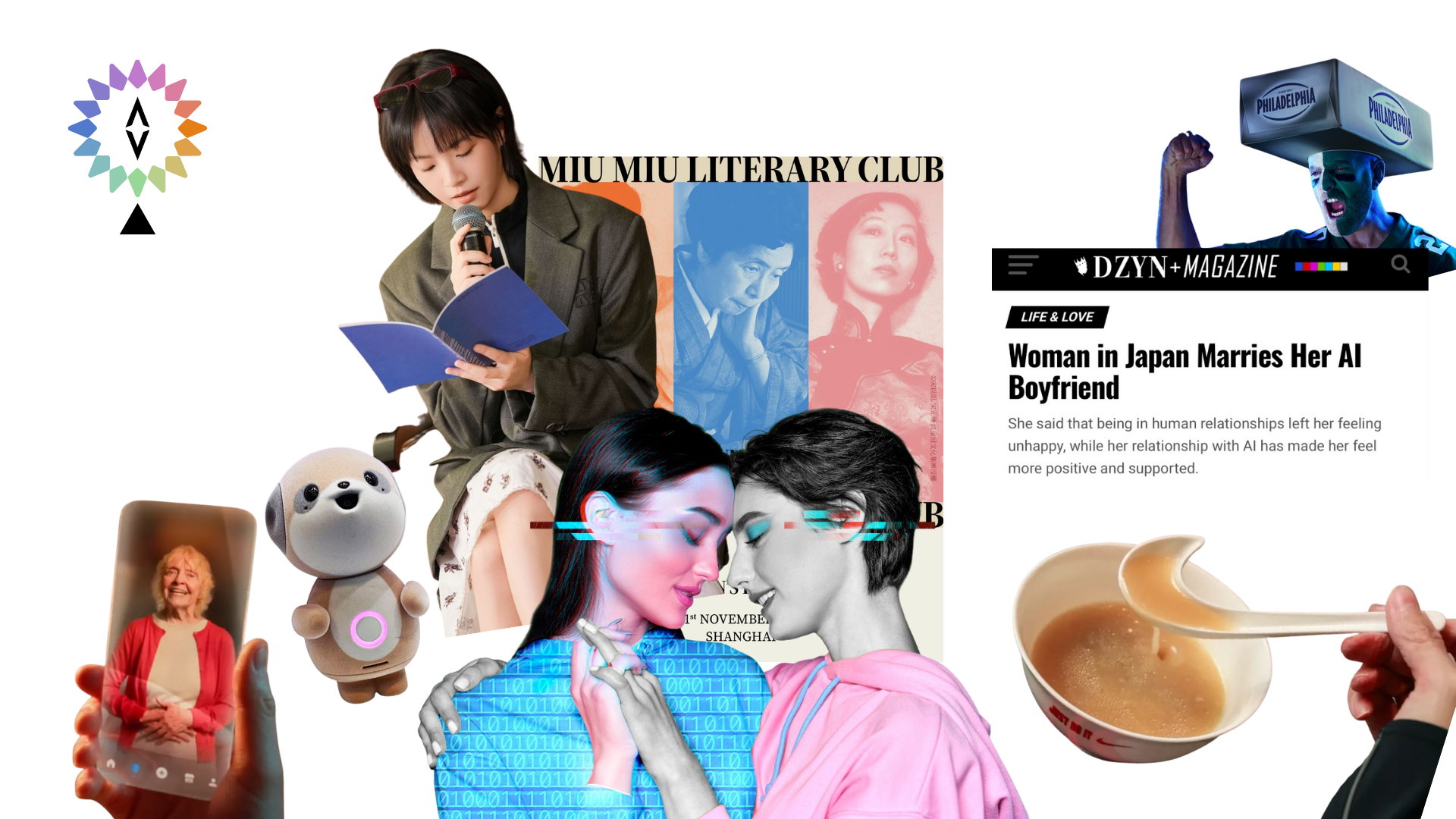
The future of “Joyning” (the name of this Pleasure Code that falls into the nexus of individual and collective of Wellbeing) lies not in better algorithms or more persistent AI companions. It lies in the patient, unglamorous work of creating environments where people naturally encounter one another. Places like University campuses that welcome retirees. Retirement communities built around shared Jimmy Buffet philosophies. Bars that serve no alcohol but still feel like parties. Book clubs sponsored by fashion brands.
The problem is, none of this is scalable in the way that Silicon Valley prefers. It cannot be disrupted or growth-hacked. And it requires the uncomfortable acceptance that some things cannot be optimised, only encouraged.
But the research from the Blue Zones suggests something more hopeful.
If you want to live a long and happy life, all you need is four or five friends whom you see regularly, who care about you, and with whom you can have meaningful conversations. Not 500 LinkedIn connections. Or a pendant that sends you encouraging texts. Four or five actual human beings.
Luckily, the technology to achieve this has existed for thousands of years.
It is called a neighbourhood.
Or a community.
Or a local pub.
Or a café.
And astonishingly, most of them don’t require a monthly subscription.
We’re living through a loneliness boom and a trust recession. That’s why this is such a potent moment for brands to become a credible bridge back to other people. Build spaces, rituals and reasons to connect. Then get out of the way and let people do what they do best: connect the dots.
-Angelique
Ready to take pleasure to the next level for your brand? I work with brand leaders ready to make the kind of moves their audiences feel long before they can explain why.
The Pleasure Codes Series
The Big Idea: Why pleasure is the ultimate brand strategy
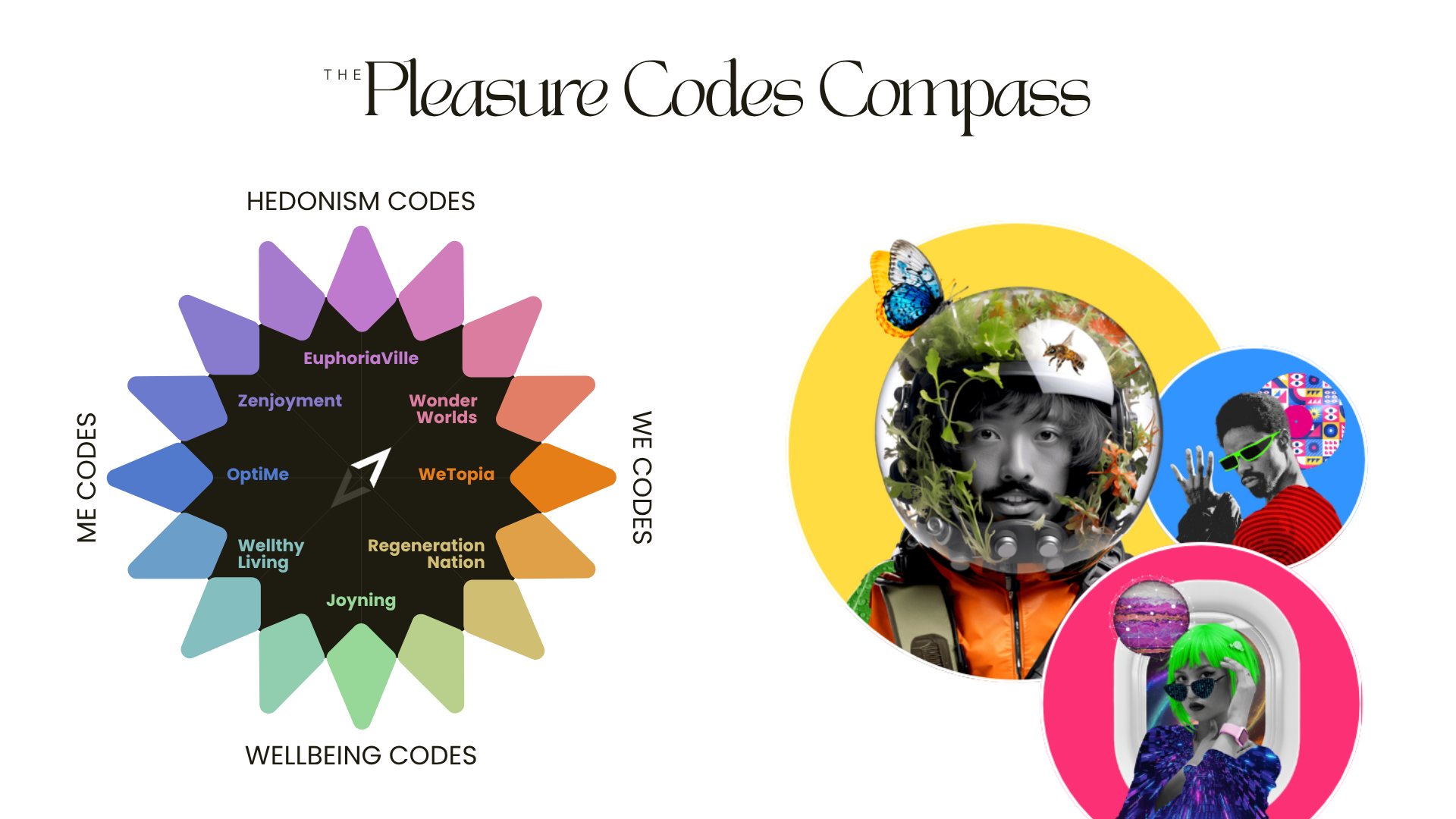
The Hedonism Codes: And why we’re longing for more comfort, escape, and wonder
Zenjoyment: On the gentle art of standing still
EuphoriaVille: The antidote we won’t admit we need
WonderWorlds: Creating magic in the age of infinite possibility
The We Codes: The strange economics of belonging
WonderWorlds: Creating magic in the age of infinite possibility
WeTopia: When trust crumbles, we pick up the hammer and nails
Regeneration Nation: The sustainability say-do gap (and how to close it)
The Wellbeing Codes: On the timeless quest for the holy grail
Regeneration Nation: The sustainability say-do gap (and how to close it)
Joyning: The loneliness paradox and why the algorithm can’t find you a friend
Wellthy living: The unbearable lightness of biohacking
The Me Codes: The peculiar pleasure of being unmistakably yourself
Wellthy living: The unbearable lightness of biohacking
OptiMe: The art of deducing self-seduction
Zenjoyment: On the gentle art of standing still