


On March 14, 2026, in a Hilton ballroom in Austin, Texas, the futurist Amy Webb presided over a funeral dressed in a black cloak while tissues were handed out to fellow mourners and sombre music filled the room. On the screen behind her, the cartoon life of the deceased played out. “We are gathered here today,” she told fifteen hundred attendees, “to remember the life of the trend report.”
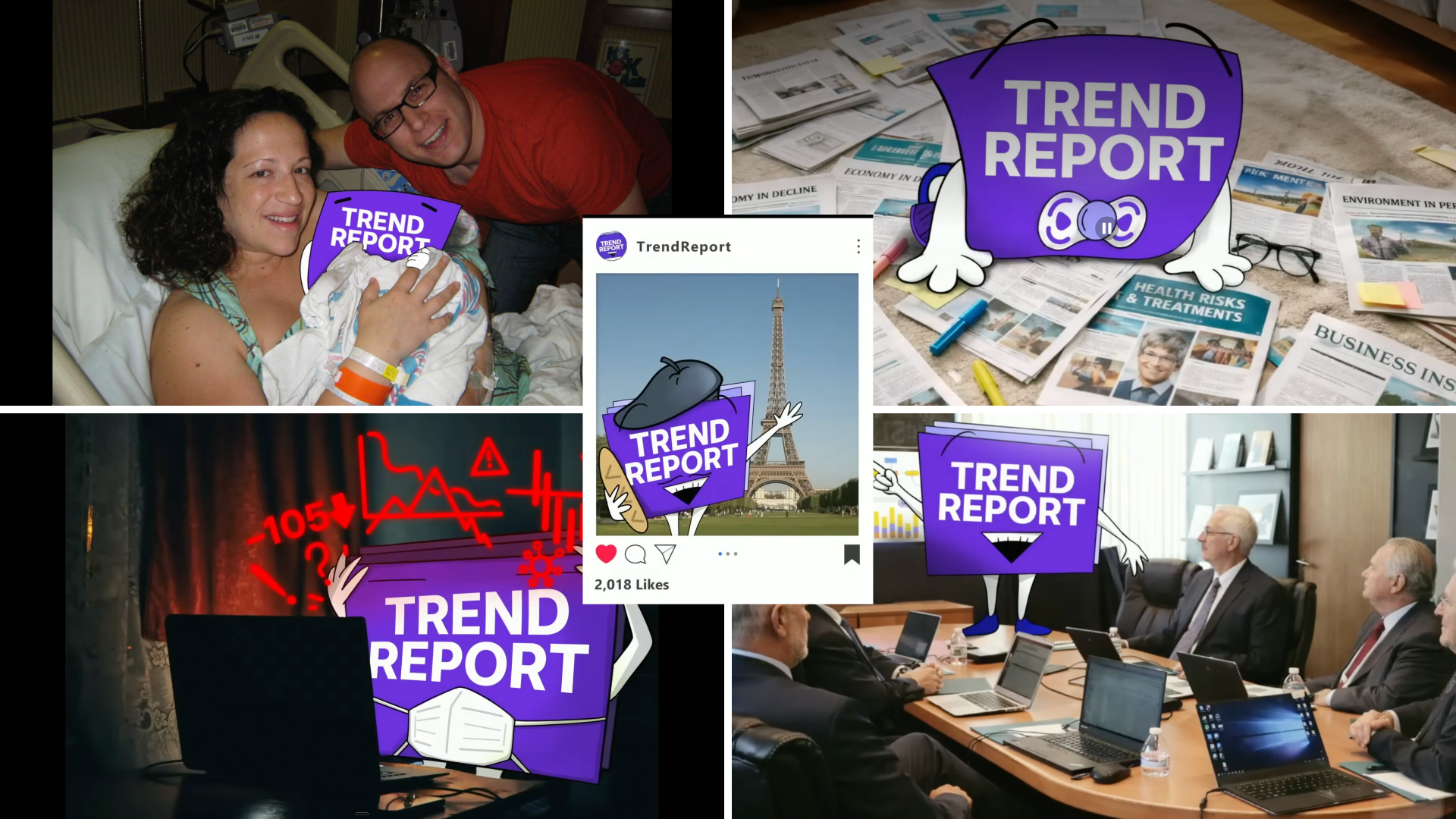
Then a University of Texas marching band came blaring down the aisles, and she launched its successor.
And surprise, surprise, it was yet another trend report.
This kind of extremist fanfare, despite the enviable showmanship, triggers me into something that’s the closest I ever get to a raging lunatic, because these kind of death of… notices are, more often than not, always some sort of clickbait designed to hijack our attention.
So when Eugene Healey, a brand strategist and cultural commentator I normally agree with, published an essay announcing the death of something that had barely been born, my involuntary eyebrow ballet started right on cue.
The Analogue Revival, he argued, never took place. In it, we were ‘promised’ a rejection of living our lives online. And in its place we’d all turn towards a slower and tactile mode of living filled with private rituals that make being offline feel like the New Luxury.
It’s a trend that I’ve been tracking since 2019 and shows up in thirty-three different ways according to my analysis of more than two hundred trend reports in 2026.
So he obviously got my attention.
Healey’s verdict was that the Analog Revival was really just a performative simulation or a costume worn for the feed.
His essay travelled the way a confident verdict tends to, earning a thousand likes and hundreds of restacks.
But what got me really excited was buried in the comments.
Become a paid subscriber and you’ll get my genuine thanks, plus:
🐆 This Month’s Trend Safari Field Guide with 65 of the latest signals of what’s currently trending plus 5 ways to turn these into new ideas for your brand
🧭 All 8 Pleasure Codes: strategic essays for brand leaders building craveable brands
📡 Free access to Pleasure Codes Plus, my brand innovation intelligence platform with thousands of worked examples, cultural signals and strategic openings, updated weekly
😈 All 8 Deadly Sins, the ancient motives beneath why we do (or buy) anything at all.
The first comment that made me slow my scroll went something like…
“People are writing each other letters, making scrapbooks, tending community gardens, and going on weekend rides that never become Strava screenshots.”
Then blunt guy…
“You won’t find the people who have unplugged by searching the platforms they walked away from.”
Then millennial mom (playing very true to type by letting us know)…
“I’ve got a house full of records, journals, printed albums, and the CD players my kids asked for. No one would know I had any of these things unless they came round for tea.”
Healey’s main argument went something like this. A friend’s sister spent a small fortune on film for her analog camera, but when she gets it developed, she leaves the negatives at the lab and only asks for the digital files to be emailed to her.
His conclusion from that was that she’d only kept the version she could post which was then extrapolated to everyone now performing the offline life for an online audience and that we’ll all still be on social media in 2026 (and beyond), despite what the trend reports promised us in January.
For those of you that know me, I have a life long love of boxing which is probably why I stuck around to read all 94 comments, because this was a pretty decent fight, with both corners landing more than a few good blows.
In the red corner, bringing the receipts in their cottagecore boxers, we have Team Slow. And in the blue corner, we have Team Skeptic, known for throwing jabs with the speed of screenshots.
I was hooked and by the final bell, the score almost felt beside the point.
I got this sense that both sides were describing the same weather from different windows and the climate for this exchange is what actually interested me most.
The Climate of Slow
Slowness is a timeless appetite. It’s the visceral hunger to stop and do one thing so fully and completely, and with all the unhurried attention the thing deserves that it reminds us of what it means to feel alive.
It surfaces with real force every time the world speeds up, and it eases only when the pressure does.
Trend pundits put names to it all the time. But they didn’t invent it, and an essay (no matter how well argued) can’t end it. The latest edition may come with fresh props and catchy lingo but the appetite underneath has worn a hundred names before this one, in languages and centuries the trend reports never check.
Which is exactly the point the whole bout misses. You can’t settle whether the pull towards slower living is real by counting analogue sightings on a feed, any more than you can predict the climate trajectory by glancing at today’s forecast. Even Muhammad Ali had a long celebrated career without winning all his fights.
You have to take the long view. And once you do, the same thing happens so reliably, across so many centuries, that calling it a trend actually sounds absurd.
Two Thousand Years, Eighteen Months
One of the things I love most about doing what I do is going down rabbit holes. And when I first got hooked by slowness, back in 2019, this particular hole took me pretty far back.
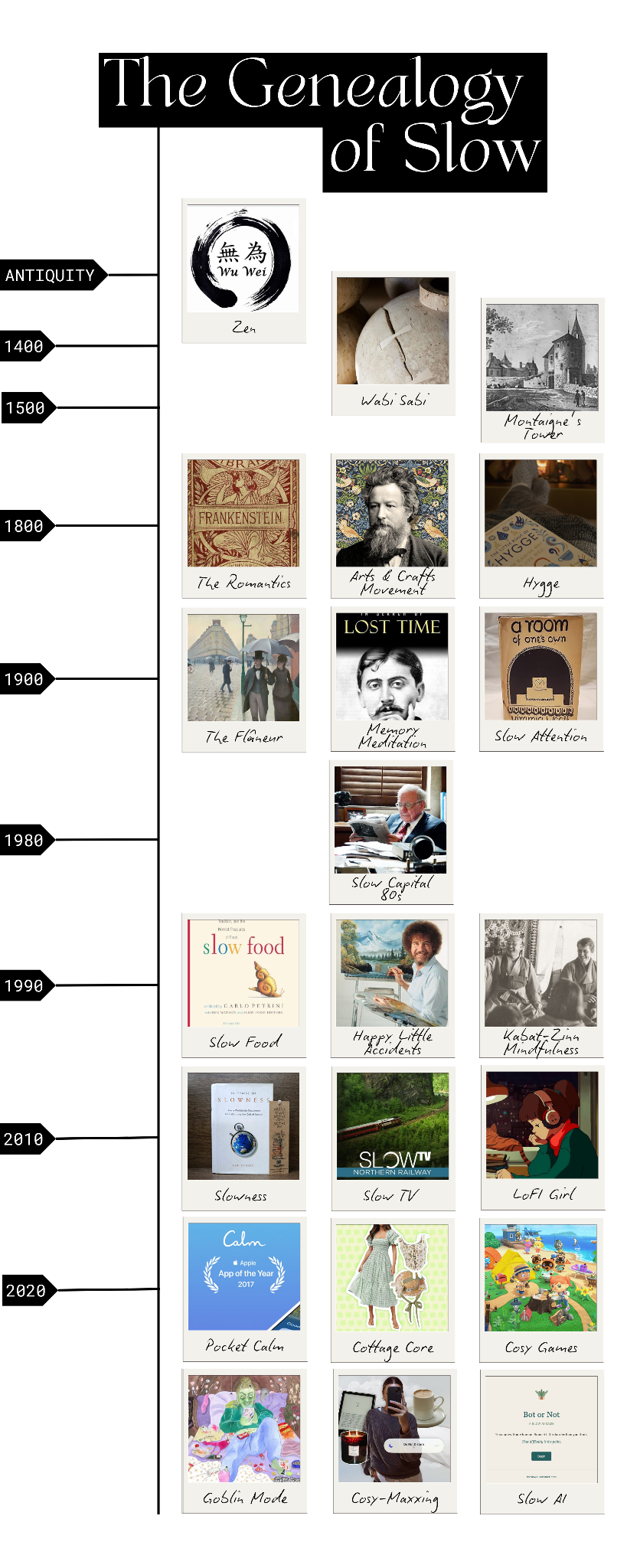
And what I noticed was that long before we could buy slowness, it was a practice starting with what the Daoists called wu wei (the art of acting without force) more than two thousand years ago.
I then followed the rabbit to Dordogne, France and found myself in a small tower room where Montaigne retired to think at his own pace and just like that, the very first known personal essay was penned (how very substack of him).
While reading Montaigne, I was reminded of my trips to Japan during the Starbucks days and the first time I came across wabi-sabi and the practice of finding beauty in the impermanence of things worn with time. This turned up recently at the Barbican, in an exhibition of garments buried in a London garden until the soil had its say, filed under Entropism, naturally.
The rabbit then led me north to Denmark and hygge, a word for the kind of attention a nation of champion candle-burners (almost six kilos a head a year, double the next country in Europe) sitting in the dark for the better part of the year needs to switch on.
Collectively, I call these the climate of slow. And look at what they all have in common. They’re all something people did under pressure, which is what a climate produces, and every one of them is for sale now.
Just look at hygge, which started with a BBC article in 2015, which caught the eye of some London publishers, who launched nine books inside eighteen months, by which point it was up for Oxford's Word of the Year (sadly losing to post-truth).
And, to me, that's the surest tell of all. Because the appetite for slow is always in the climate until the world speeds up enough to kick it into weather. And the second there's weather, somebody rushes out to name the storm.
A Short History on the Rebellion Against Fast
The first big named storm came when the factories arrived. Model T Fords rolled off the line every ninety-three minutes, when it previously took a full twelve and a half hours to build.
But the resistance had started decades earlier with William Morris and his Acanthus wallpaper taking the better part of four weeks to make because each colour had to be applied and dried separately. Meanwhile a mill down the road was running off miles of the stuff before lunch. That was the whole of the Arts and Crafts movement, really: a defiance of speed through the defence of the made thing and the maker's hours.
In the same soot-and-gaslight streets, the flâneur appeared with his deliberately slow walk through the arcade. He was even occasionally spotted (and I promise this is real) with a pet turtle on a leash to set the pace.
The second storm blew in after the Second World War and came straight for the dinner table. When Swanson first packed their unsold Thanksgiving turkeys into aluminium trays with a scoop of peas and christened the result a "TV dinner," they sold over ten million in the first year. Fast had come for the meal and dinner became something you heated and ate off TV trays, facing the electric blue glow of a screen instead of each other (sound familiar?).
A few decades later, McDonald’s announced they were bringing fast food to Rome with a new restaurant planned to open near the Spanish Steps in 1986. Outraged by the gall, an Italian named Carlo Petrini protested with his well argued case for Slow Food which came with a snail on his banner and a stubborn insistence that a meal is worth the time it asks for.
Then came Broadband. And after that a phone in every pocket. The age of always-on connection became the default condition of modern life. And the collective cases for slow started to, counterintuitively, speed up.
In Praise of Slow, by Carl Honoré, became a best seller. Meditation became mainstream. Norway even started a Slow TV movement by live streaming a seven hours and four minute train journey and 1.2 million people tuned in.
And just like that, remedies for the always-on life became an entire market for the price of a Calm subscription.
So when the pandemic arrived, we were all primed for what came next. And of course the internet went soft and pastoral with cottagecore, cosy gaming, and Animal Crossing. Is there no better way to celebrate the resistance to fast than voting Goblin Mode word of the year? Or practicing cosy-maxxing and bed rotting as new life scripts?
All of which brings us to where we are now, living in the automation age where machines can think and do for us anything that we can possibly imagine. They can even hallucinate for us.
And right on cue, here’s Healey, standing in the middle of the latest storm telling us the rebellion is dead. But what if the fight in the comments is the rebellion? I think it turned up bang-on schedule, the same way it did for Morris or Petrini, and he simply can’t read the timetable from where he’s standing.
Which brings me to the question every leader needs to wrestle with: where do you stand? Are you for the experiences that grab attention and travel well on the feed? Or for the slower experiences that are deeply felt?
My take is it will become increasingly difficult to stand for both.
Today’s piece was inspired by the large number of signals of Zenjoyment, the Pleasure Code for the want of calm and shelter when the world refuses to sit still.
Your Field Guide Awaits
Everything you’ve just read is the story.
What follows is the field guide.
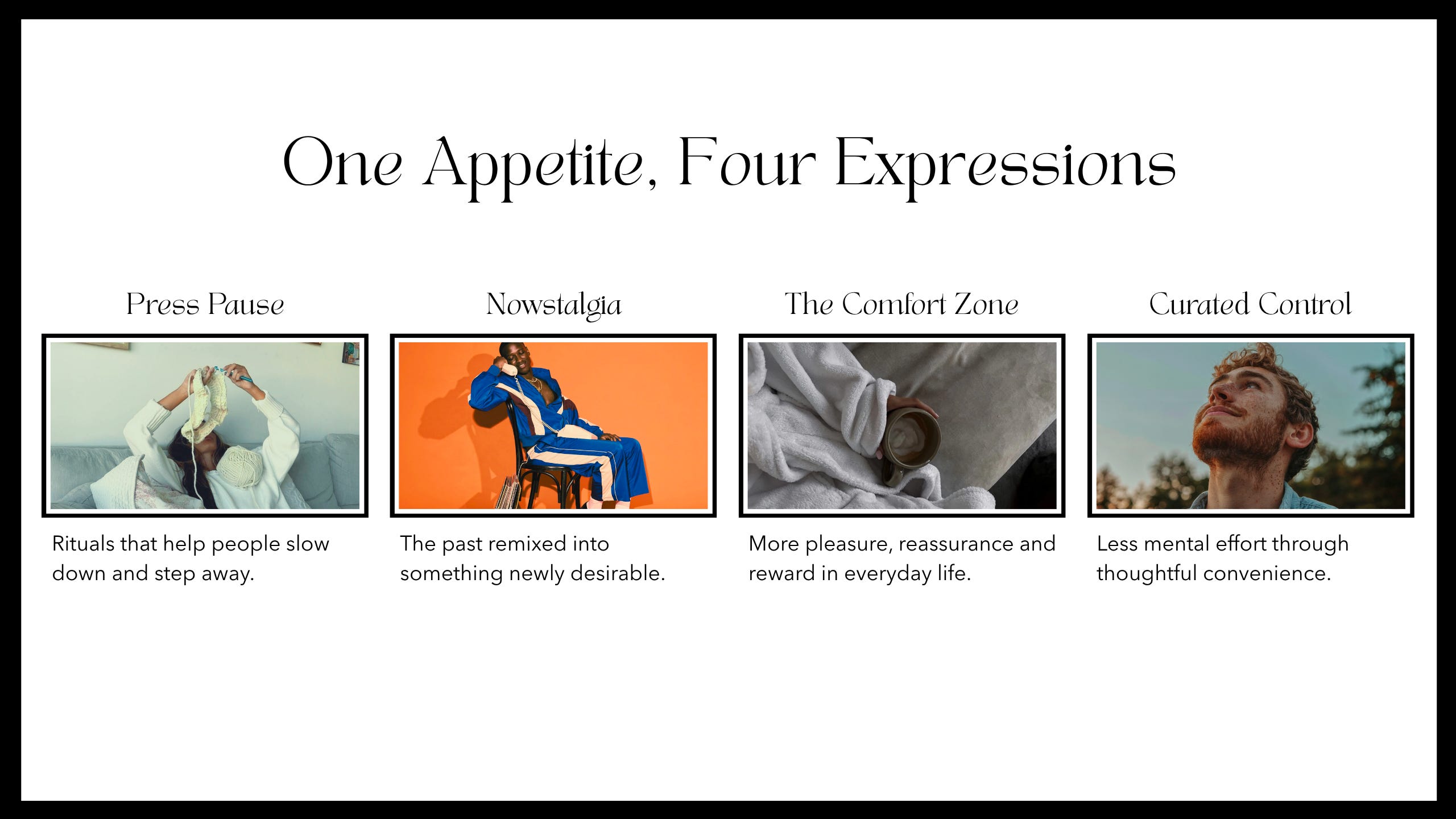
Inside you’ll find 65 signals that show how this Pleasure Code is currently showing up:
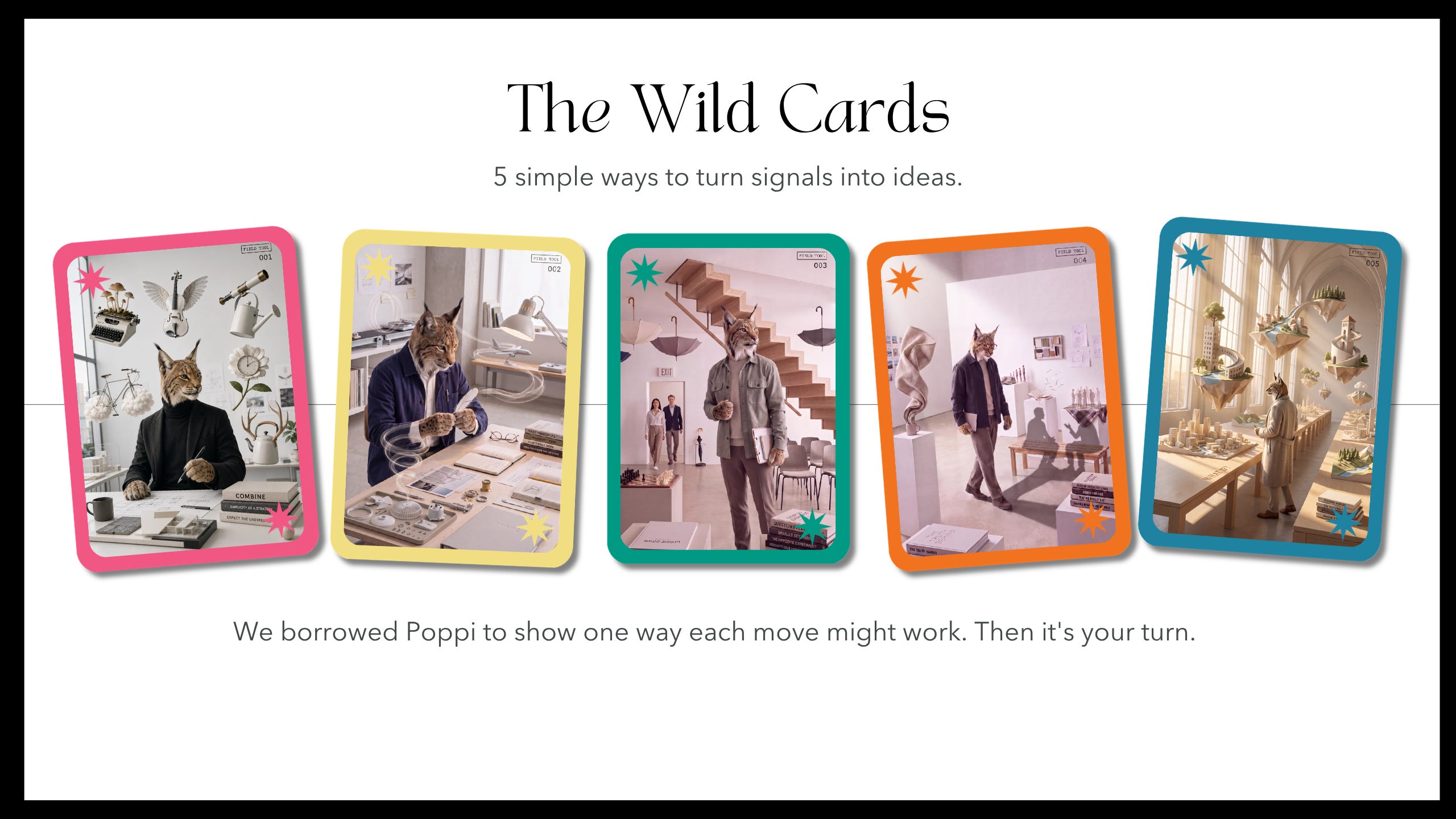
Plus you’ll get five creative Wild Cards designed to help you turn what you’ve spotted into something original for your brand:
Happy exploring.