

Sloth
The sin you can't advertise

The Seven Deadly Sins of Brand Building is a series where I explore Chris Paik’s investment framework to mine new opportunities for brands to become unforgettable. New here? Get full access to the series here.
There’s a character in Zootopia (the animated film, not a business book, although the distinction matters less every year) who is a sloth working at the Department of Motor Vehicles. His name is Flash.
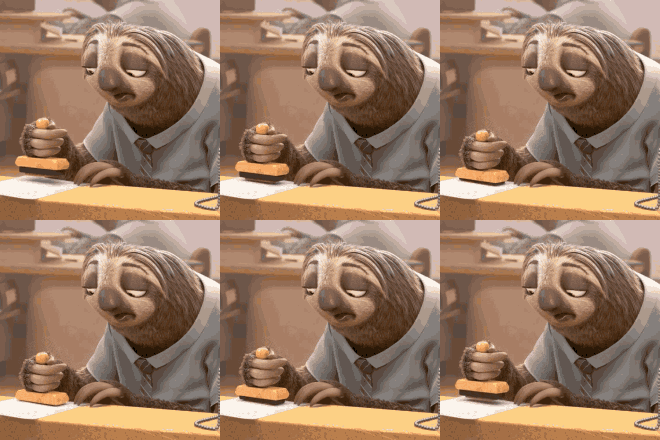
He speaks in a drawl so slow the other characters visibly age while waiting for him to finish a sentence. And yet, in the film’s final scene, Flash is pulled over for speeding.
He drives the fastest car in the movie.
I’ve been thinking about Flash for weeks now, because he contains, in the form of a children’s cartoon, the central paradox of sloth as a commercial force: the sin of doing nothing requires, for its satisfaction, products that move very, very fast.
This is the newsletter I almost couldn’t write. Not because sloth is complicated, it is, in Paik’s framework, the easiest sin to monetise, since people place a remarkably consistent price on the trade-off between money and time. But because sloth is the only sin you cannot advertise.
You can dare a person into gluttony. You can seduce them into lust. You can even inflame their envy and flatter their pride. But you cannot (and this is the discovery that kept derailing my drafts) look a person in the eye and say: be lazier. The moment you do, something very interesting happens.
They recoil.
The Cake That Nobody Bought
This story is well known in marketing circles, though its lessons are still being relearned. In the early 1950s, the “just add water” cake mixes, Duncan Hines, Betty Crocker, and others, had flatlined. They should have been irresistible: open the box, add water, stir, bake. The ultimate homemaker’s convenience: the removal of friction from an activity that had, until that point, required skill, time, and the better part of an afternoon.
But, sales had slowed way down.
The companies (led by General Mills for Betty Crocker) hired the marketing psychologist Ernest Dichter, a pioneer in consumer motivation research, who studied the problem through interviews with housewives. His conclusion was elegant and devastating: the women weren’t buying because the ease made them feel guilty. Not guilty about the cake itself. Guilty about the lack of effort. Guilty about presenting their families with something that required no skill, no investment of self. The cake was too convenient. The sloth was too naked.
Dichter’s solution was to add friction back in. He advised General Mills to remove the powdered eggs from the mix and require adding one or two fresh eggs instead. Make the baker feel involved. The eggs improved nothing in the tin. They improved everything in the mind. They gave the consumer ownership of the result, a sense of participation that the “just add water” formula had stripped away.
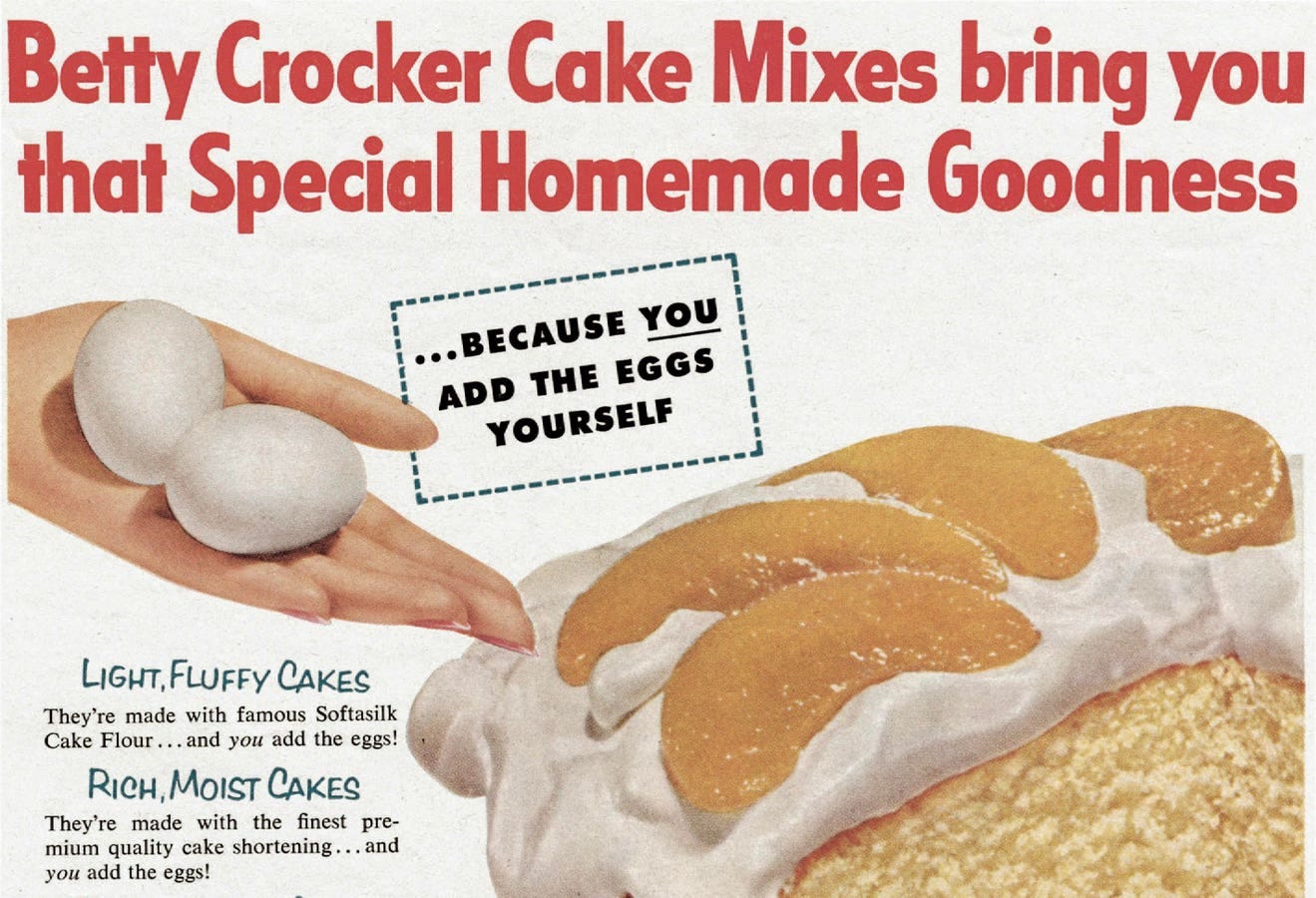
Companies like Duncan Hines followed suit. And the cake mixes sold. They sold enormously.
The story has more layers that most people don’t talk about. Fresh eggs also improved quality (powdered ones often led to sticking, burning, or off tastes), while the bigger long-term surge came from aesthetics: the emphasis on creative decorating (later supercharged by ready-to-spread frosting) turning the cake into a personalised showpiece of homemaker artistry.
Behavioral scientists would later name this the IKEA effect: the tendency to overvalue things we’ve helped create. But Dichter grasped it decades before anyone assembled a bookshelf with an Allen key.
Sloth, when presented without disguise, triggers a revulsion that no amount of convenience can overcome. And that lesson has been repeating itself ever since.
The Sin That Requires Speed
Paik’s examples of sloth brands are, characteristically, literal. Amazon. Uber. Waymo. These are companies whose entire value proposition is the removal of effort, the systematic, engineering-driven elimination of every obstacle between the consumer and the thing the consumer wants. Jeff Bezos articulated this with a clarity that deserves admiration if not affection: people will always want their products cheaper and faster. Nobody will ever say, I wish Amazon were more expensive and slower. Build on what will never change.
What’s interesting (and what Bezos does not say, because saying it would be the Duncan Hines mistake all over again) is that “cheaper and faster” is merely the polite translation of more slothful. Amazon doesn’t advertise sloth. It advertises convenience. Uber doesn’t advertise laziness. It advertises getting where you’re going. Waymo doesn’t say: sit back and do nothing while a robot drives you through traffic. It says nothing at all. It plays calming music and shows you a little map and lets the absence of effort speak for itself.
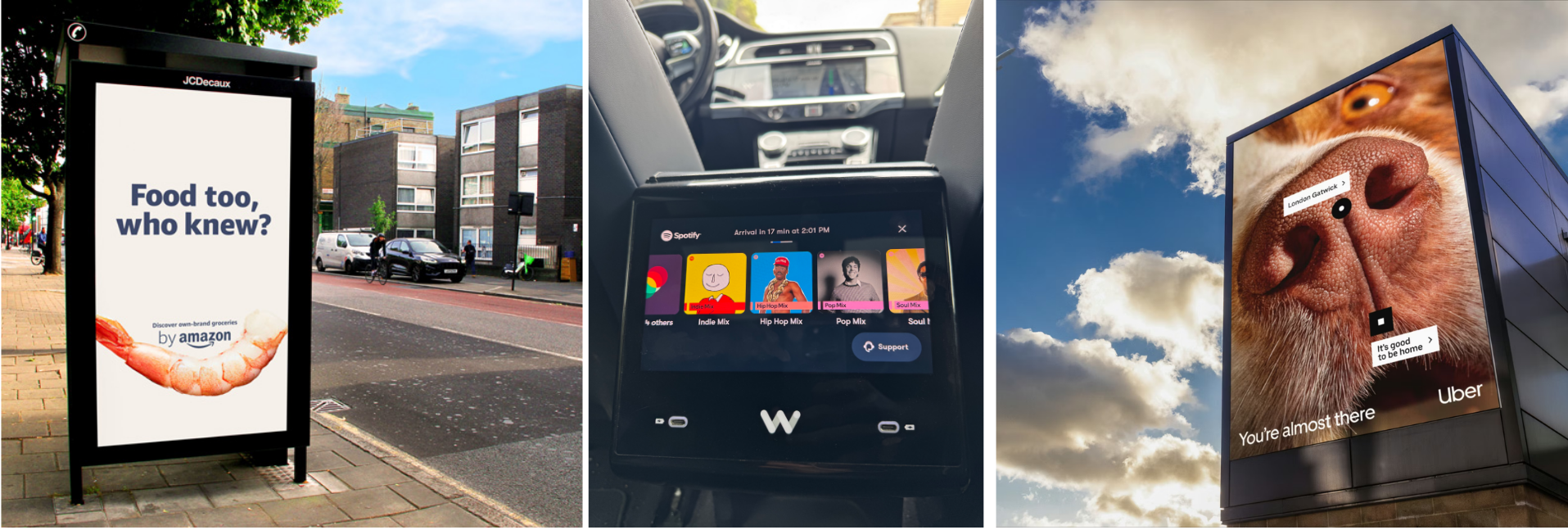
This is the rule: sloth must be baked into the product. It can’t be baked into the marketing. Every other sin in this series can be deployed through branding alone. Lust can be sprayed onto a bar of soap with the right Pleasure Code. Ask Helen Lansdowne Resor, who did it in 1911 with nothing but a headline and an illustration. Gluttony can be engineered into a theme park through sensory architecture. Envy requires scarcity, which is a business-model decision. But sloth requires something more fundamental. It requires the actual removal of friction from the real product. And then (here’s the crucial part) it requires you to never, ever call it what it is.
Subscribe to read the full piece and get the deeper strategic pattern, the full Seven Sins series, and Pleasure Codes Plus.