

The Itch I Scratch
Or, why you can’t make money on virtue and what the seven deadly sins have to do with your brand.

The Seven Deadly Sins of Brand Building is a series where I explore Chris Paik’s investment framework to mine new opportunities for brands to become unforgettable. New here? Get full access to the series here.
There’s a thesis circulating Silicon Valley, and by “circulating” I mean it has been whispered in the manner that all truly useful ideas are whispered, which is to say nervously, and between people who would rather not be caught saying it aloud, that goes something like this:
Every successful company appeals to at least one of the seven deadly sins.
The man who put this idea to paper with the most conviction is Chris Paik, a general partner at Pace Capital, a venture firm in New York with some four hundred million dollars under management. (With full credit to Judith Dada for introducing me to Paik’s framework in her great piece that expands on the thinking ❤️)
Paik does not invest in companies that appeal merely to the better angels of our nature. He invests in companies that appeal to the worse ones. Or (and this is the part where it gets interesting) he invests in companies that appeal to what he calls not sins at all, but the seven core motivators of humanity. The fact that they have survived all of recorded time without a single edit, he argues, is proof of their power.
You cannot make money on virtue.
That is Paik’s operating principle. And before you recoil and reach for the reassuring platitudes about purpose-driven brands and conscious capitalism and the thirteen-point-four trillion dollar pleasure economy that I have spent the last several months anatomising in this Newsletter, I would ask you to sit with the discomfort for a moment. Because the discomfort is the point.
The Seven Itches
Let us name them, since naming things is what we do here. Pride. Envy. Lust. Gluttony. Greed. Sloth. Wrath.
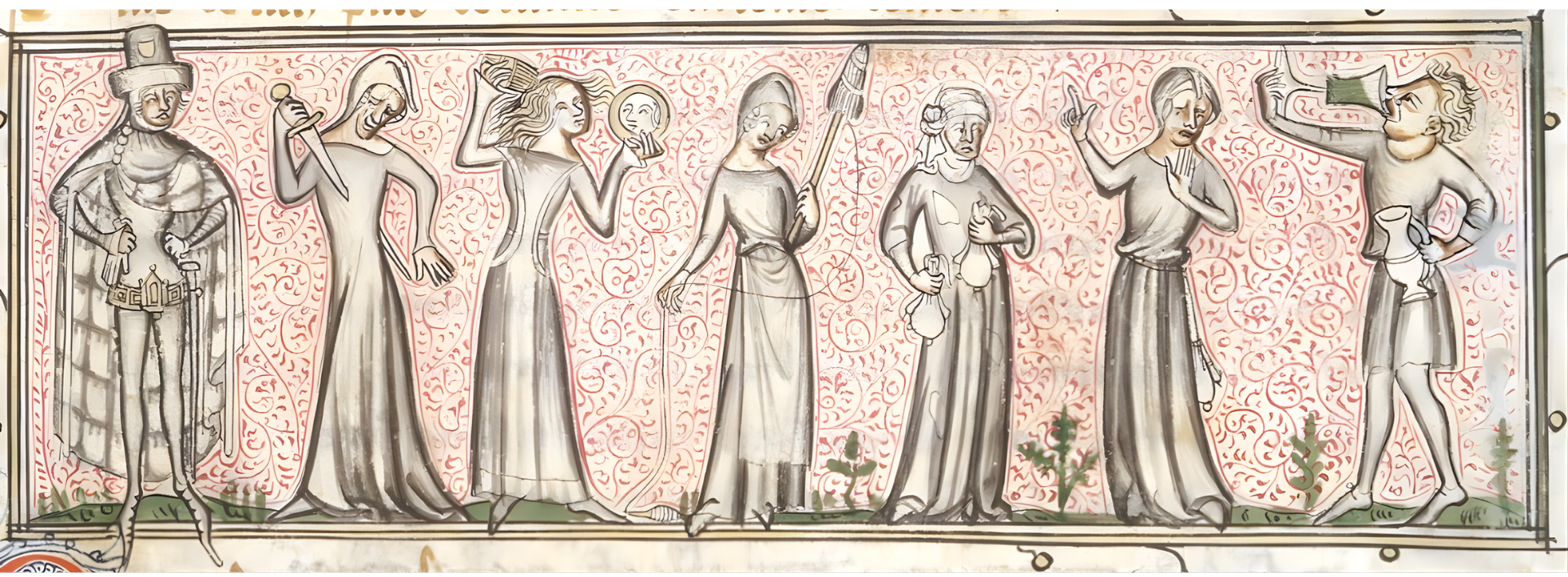
Seven words that have survived since Pope Gregory the Great first codified them in the sixth century (give or take a few centuries of theological haggling). They have outlasted empires, philosophies, economic systems, and approximately eleven thousand management frameworks. And they have survived because they describe, with a precision that no business school case study has ever matched, the irreducible reasons why human beings do anything at all.
Paik’s insight (and it is an insight, not an invention, which is an important distinction we shall return to) is that the sins were never intended as descriptions of evil. They were intended as moral guardrails erected to counteract the basic human motivators.
I need to eat, but when taken too far, that is gluttony, so we add a moral code. I need to procreate, but when taken too far, that is lust, so we add a commandment. I need to rest, but when taken too far, that is sloth, so we add a Puritan work ethic and a great deal of Jewish guilt.
The sins, in other words, are not descriptions of what is wrong with people. They are descriptions (one could also say roadmap) of what people are. And what people are, it turns out, is investable.
Consider DoorDash. What is DoorDash in this Dantesque investment philosophy? It is sloth combined with gluttony. I want what I want and I want it now, and I want it brought to me without the exertion of leaving my sofa. That is not, despite what anyone thinks a food problem or a technology problem or a logistics innovation. What it is is a motivational reality dressed up in a venture-backed interface. It is the convenience of my sloth combined with the insistence of my appetite. It is two sins for the price of one delivery fee.
Or consider social media itself. Paik ascribes it, correctly I think, to pride. The entire architecture of Instagram, or LinkedIn or even Substack, or that graveyard of decorum formerly known as Twitter (which also bled out into wrath), is built upon the human need to be seen, to be admired, and to be envied. You may call it personal branding. You may call it thought leadership. You may call it sharing your authentic self. It is pride. The Medicis knew this when they commissioned Botticelli. We merely democratised the canvas and called it a feed.
Nothing New Under the Sun (And That’s the Point)
I should say here, for the skeptic that there is a layer of Paik’s thesis which amounts to a very old idea wearing very new clothes.
If you wanted to, you could match each of the seven deadly sins to a corresponding tier of Maslow’s hierarchy of needs. Maslow simply made them polite. The need for sex becomes the need for intimacy. The need for dominance becomes the need for self-actualisation. The need for more than your fair share becomes the need for security. Same drives, different gift wrapping.
And to that extent, yes: there is nothing new here. Except for one thing, and the one thing is not trivial. Paik is unashamedly, unflinchingly, unapologetically focusing on the negative formulation. He is calling the drives by their oldest, most uncomfortable names. He is refusing to dress them up. And in refusing to dress them up, he’s adding something that the positive psychology crowd and the purpose-driven brand consultants and the wellness-industrial complex have been very carefully subtracting for the past thirty years.
He is adding honesty.
People do not download DoorDash because they have an unmet need for culinary convenience. They download it because they are hungry and lazy and would rather not put on trousers. People do not buy luxury handbags because of brand heritage and artisanal craftsmanship. They buy them so that other people will see them carrying caché. People do not subscribe to fitness apps because of a commitment to holistic wellness. They subscribe because they are vain, or frightened of death, or both—and vanity and the fear of death have been selling things since long before anyone thought to call them a wellness journey.
People will choose not the suitor who tells them the truth, but the one who is most charming and whom they know is the biggest liar, because they find him more satisfactory. The consumer does not want the best. The consumer wants what the consumer wants. This is the seamy side that Paik spends his career probing behind the bonny smile and the gracious gesture, and it is the seamy side that he has now dressed up in a spreadsheet and called an investment thesis.
What Nietzsche Would Say (And Probably Did)
When I first read this and went down the Paik rabbit hole I had two reactions.
My first and immediate reaction was that it was the anti-Pleasure Codes. That it was the dark mirror of everything we have been building here, and that it took our sunlit $13.4 trillion pleasure economy and turned it inside out to reveal the writhing, less photogenic motivations underneath.
My second reaction, following hard upon the first, was: of course it did. Because that is precisely how the world works. The sunny side and the seamy side are not different things. They are the same thing viewed from different balconies.
Friedrich Nietzsche (who is nobody’s idea of a brand strategist but who, I would argue, understood human motivation better than any man who has ever held a focus group) would have had a very particular reaction to Paik’s framework. He would have said Paik did not go far enough, but not because the sins are not sinful enough. But because what he was describing were never sins to begin with. Nietzsche spent his career arguing that what Christianity called vices were, in fact, the very forces that propelled civilisation forward. That lust was not degradation but vitality. That pride was not corruption but self-overcoming. That what the moralists called sin, the honest observer would call energy. So he would argue that Paiks sins are not sins at all. He would have called them drives. Life-affirming, essential, irreducible drives.
This is why, by the way, anyone who actually reads Nietzsche (as opposed to those who merely cite him to sound interesting at dinner parties, which is a very different activity) discovers something unexpected: joy. A fierce, combative joy in being alive and refusing to apologise for the fact. Which brings us, rather neatly, back to the question at hand.
If the sins are not sins but motivators (if they are, as Paik argues, the core motivators of humanity, timeless and unedited) then what, exactly, is the relationship between these motivators and the Pleasure Codes? Is this a contradiction? A competition? Or is it something else entirely?
The Itch and the Scratch
The answer, I believe, is contained in a metaphor so simple it borders on the embarrassing:
Paik’s sins or Nietzsche’s drives describe the itch.
The Pleasure Codes describe the scratch.
That is not a layer or a hierarchy, and if we are being honest, it’s not even a framework. It’s a sequence.
The itch always comes first.
It is primal, involuntary, hardwired. You did not choose to feel it. You cannot will it away. It has been with you since before you were you, since before your species was your species, since the first organism developed the capacity to want something it did not yet have.
The scratch comes second.
It is designed, intentional, strategic. It is what brands aim to do. It is what products aim to do. It is what the entire $13.4 trillion pleasure economy is designed to do. That is, it provides relief. It provides satisfaction. And to provide (and here is the word that matters) resolution.
A human being walks through the world carrying seven irreducible itches. Your job, if you are in the business of brands (and if you are reading this newsletter, you are in the business of brands, whether you know it or not), is to understand which itches you scratch. Not which itch you wish it scratched. Not which itch your brand purpose manifesto claims it scratches. Just which itch it actually scratches, in the privacy of the consumer’s unwitnessed behaviour, where virtue goes to die and desire goes to shop.
What This Means for Your Brand (Whether You Like It or Not)
Let me give you an example of what I’m talking about here:
There is a longevity startup. It makes designer amino acid and peptide supplements with DNA level accuracy. It positions itself as biopharma. It wraps itself in the language of clinical research, cellular optimisation, bioavailability metrics. It currently lives in the OptiMe space, which is what we call the space where every other brand making the same category claims has already pitched its tent and is fighting over the same square inch of consumer attention.

But there are far more interest-grabbing itches it could scratch. Think about it. What is longevity, really? Is it really health? Or is it pride? The refusal to age. The insistence on remaining. Is it lust, self-love in its most literal, physical sense? The desire to remain desirable? Is it greed, the want of more time, more years, more life than one’s allotted share?
The biopharma positioning scratches none of these itches. It appeals to the rational mind, which as every honest practitioner of persuasion already knows, is almost never the mind that makes the purchase.
Compare this with Gillian Anderson’s beverage brand, G Spot.

Everyone in the functional drinks space is making claims about adaptogens and nootropics and gut health. So Anderson called her version: G Spot.
Why?
Well, first off because no one else would, so she could.
But also because her name is Gillian and the wordplay was available.
But also because, in two syllables, she leaned into a completely different motivational space than every other wellness brand on the shelf. She, in other words, scratches a different itch and acknowledges what the category would rather pretend does not exist: that people buying wellness products are not, in their secret heart of hearts, buying wellness. They are buying the feeling of being alive and sensual and unashamed of wanting things. Or in other words they are buying, and here it is, pleasure.
A Most Uncomfortable Conclusion for Newsletter About Pleasure
So here, then, is where we land. And if the landing is not entirely comfortable, that is because comfortable landings are for newsletters that are trying to sell you something, and this newsletter is trying to sell you nothing except the idea that you might look at your own brand a little differently tomorrow morning.
The seven deadly sins are not a competing framework to the Pleasure Codes. They are the subterranean layer beneath them. The sins are the ancient, irreducible reasons why human beings want anything at all. The Pleasure Codes are the modern, designable mechanisms by which those wants can be met, resolved, and, if you are very good at what you do, transmuted into loyalty, advocacy, and the kind of irrational attachment that no amount of purpose-driven brand manifestos will ever produce.
The itch is the sin. The scratch is the pleasure code. Your brand is the back scratcher. And if your brand does not know which itch it is scratching, or, worse, if it is pretending that its customers have no itches at all, that they are rational, virtuous, purpose-aligned beings making considered decisions about brand values, then your brand is not merely ineffective. It’s dishonest. And there is nothing, and I mean nothing, that the consumer despises more than dishonesty about the things they already know to be true about themselves but won’t admit.
I’ll pause here so that you can read that again.
Because the least the hypocrite can do is be graceful about it. At least make the smile look as if it were a smile.
Your customers know why they buy from you. Even if they don’t. The question is whether you have the nerve to know it too.
Angelique
Next time: We begin the deeper dive. One sin. One set of Pleasure Codes. Starting with the one nobody wants to talk about first, which means it’s the one we should. Lust.
“People don’t want the best, they want what they want. The girl is free choice, and the suitors are free speech, and out of the free choice and free speech comes the free market. Now the free market is an absurd thing in which people are always buying the things that they ought not want.”
—Nicholas Samstag, 1964
you scratched my itch with this provocative, beautifully researched and articulated piece. thank you !
This idea is by far the most exciting read on the psychology of brands, and motivation behind people buying anything (even services) and I couldn’t help but nod away — as uncomfortable as many might feel, it is indeed very true.